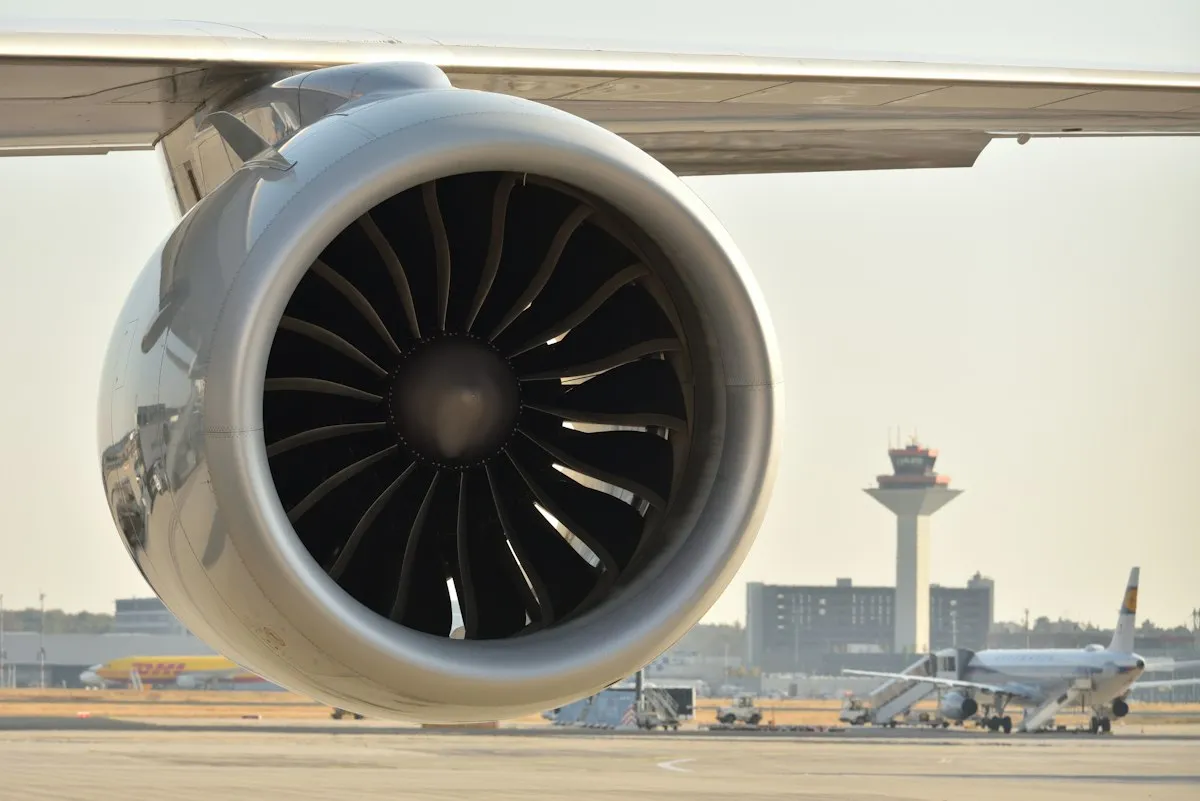
Portfolio Part 1: The pandemic bets
A 12x winner, a write-off and the uncomfortable fact that I could not tell them apart
The short version
I put about CHF 2,800 into Rolls-Royce between October 2020 and March 2022. That holding is now worth roughly CHF 35,000 and makes up a quarter of my portfolio.
I didn’t plan for it to grow into that. I had a specific thesis when I bought it, which I come back to below, so it wasn’t just a punt - but I had no way at the time of telling that thesis apart from the other pandemic bets I was making on similar logic, one of which went to zero and another of which got restructured out from under me. It all felt like the same reasoning in the moment. The results turned out nothing alike.
The account is now worth approximately CHF 143,000 against CHF 77,000 of cash deposited. This series is my attempt to look honestly at what that account actually contains, how it got that way, and what I have changed my mind about since: the one pandemic position that worked spectacularly, the two that were wiped out, and what I was doing (or not doing) with the rest of the account in the four years since. Part two covers the shape the account ended up in. Part three is the strategy I am borrowing to fix it.
How the account is set up
A word on the machinery first, because it explains a few decisions that would otherwise look arbitrary.
This is a single brokerage account with DEGIRO, opened in July 2020 and funded in francs from Switzerland, where I live and am paid. It is not my net worth or my retirement plan - it is the discretionary slice left over after the dull Swiss machinery takes its cut: about CHF 1,000 a month into Pillar 3 (3a and 3b) and an extra 2% voluntary contribution into Pillar 2 on top of the standard employer and employee amounts. That is worth stating plainly, because between them those pillars are worth more than this whole account, and it is the real reason I am relaxed about holding no bonds here - the boring, defensive part of my finances already exists somewhere else.
Two smaller details shape everything that follows. The broker sets the menu, which is why my Asian exposure arrives through an American depositary receipt rather than a Taiwanese listing. And almost nothing I own is priced in francs - the holdings are in pounds, euros, dollars and kroner, so every position carries a currency bet I never consciously took. There is a small, annoying worked example of that further down.
The costs, at least, have stayed out of the way: total broker and exchange fees across six years come to about CHF 435, or roughly 0.6% of everything I have deposited.
Buying into a pandemic
I opened the account in July 2020, four months into the pandemic. My first purchase was a broad global equity ETF - sensible, boring and still held today.
What followed was not boring. Over the next two years I built a small basket of companies hit hardest by the shutdown and looking cheap because of it: an aero-engine maker whose customers’ aircraft were grounded, a freshly spun-off energy business, two airlines and a car-rental group going through a debt restructuring. It was a coherent theory - buy the reopening - even if I never used that phrase at the time.
It was also a concentrated punt dressed up as diversification, because it touched several different tickers. The positions were tiny, which is the only reason the failures did not matter much. Buying five versions of the same bet is not the same thing as spreading risk.
The good, the bad and the wiped out
Rolls-Royce is the outlier, and the one position where I can still reconstruct exactly what I was thinking.
It helps to say what Rolls-Royce actually is first, because “aero-engine maker” undersells it. The group is really three businesses bolted together: Civil Aerospace (the jet engines everyone knows it for), Defence (submarine reactors and military engines for the likes of the Typhoon and F-35) and Power Systems (diesel and gas engines for data centres, ships and standby power). In 2020, the year I bought, Civil Aerospace was only 42% of group revenue - Defence and Power Systems between them were the majority, and both kept ticking over while airliners sat grounded on tarmac. That internal spread is not something the market talked about much at the time, and it is a large part of why the company survived a year in which its headline business effectively stopped.
The market was pricing Rolls-Royce as an aero-engine manufacturer whose customers had stopped buying aircraft. But a large share of its earnings comes from servicing those engines, billed largely on hours flown - and grounded aircraft eventually fly again. The installed base was still out there, still owned, still needing maintenance. The share price was treating a demand pause as permanent impairment.
Two other things made me willing to hold through the drawdown. The submarine-reactor work in that Defence segment makes it strategically difficult for a British government to let the company fail, not a guarantee, but a meaningful floor under the bankruptcy scenario the market seemed to be pricing. And I liked the optionality in their small modular reactor programme, a separate and much newer bet: unlikely to matter for years, essentially free at that valuation, and a genuine second act if it worked.
So I bought as the shares collapsed through late 2020, took up the rights issue that November, and kept adding through 2021 and into March 2022. Eight purchases, about CHF 2,800 net after the rights issue returned some capital. I have not bought or sold a single share since. The position did the rest on its own.
Monthly close in pence. Dots mark my buys; the rights issue was priced at 32p.
Two things stand out in that chart. The shares had already fallen a long way before I did anything - from around 880p in early 2019 to 340p by March 2020. And my timing was not the clever part: I stopped buying in March 2022 at 93p, and the shares carried on falling for another six months, bottoming at 69.6p in September 2022. The position spent the better part of two years underwater before any of it worked.
I also want to be fair about how much credit to take for the size of the outcome. The thesis was right, and for the reasons I believed at the time rather than by accident. But a thesis like that justifies maybe a double or a triple as servicing revenue normalises. It does not predict a twelvefold return - most of that came from margin improvement under new management, a defence spending cycle I did not forecast and an SMR narrative that ran far ahead of any actual reactor. I was right about the floor; the ceiling was down to luck.
Siemens Energy is the same shape at a smaller scale, and it is a closed chapter rather than a paper gain. I bought steadily from its 2020 spin-off through the period when its wind-turbine division was losing money badly, then sold the lot in April 2025: CHF 4,710 in, CHF 16,223 out, a real, banked profit of around CHF 11,500.
Then the other side of the ledger, where similar-sounding reasoning produced nothing. The airlines looked like the same trade - grounded today, flying tomorrow - but an airline has no installed base earning it money and no strategic protection, just fixed costs and debt. SAS went through a bankruptcy restructuring and my shares were cancelled outright. Europcar’s debt-for-equity restructuring left my original shares worthless.
Norwegian Air Shuttle is the one I remembered wrongly, and checking it was worth the effort. I had it filed as a small loss. In kroner it was not a loss at all: I put in 3,916 NOK over five years and took out 3,900, four-tenths of a percent from flat. The original 2020 purchase fell 76% through a 1:100 reverse split; what rescued it was the 2021 rights issue, which felt most like throwing good money after bad at the time. Those rights cost an all-in 11.89 NOK a share against a 15.00 exit, and they dragged the position back to level.
Here is the whole pandemic basket, settled up - split into two charts, because the two positions that mattered would otherwise squash the other five to invisible dots on the same scale.
Rolls-Royce and Siemens Energy, rounded CHF.
Same axis units, zoomed in. Europcar and SAS were wiped out to zero.
| Position | Put in | Out or worth today | Outcome |
|---|---|---|---|
| Rolls-Royce | 2,816 | 35,129 | still held |
| Siemens Energy | 4,710 | 16,223 | sold 2025 |
| L&G AI ETF | 215 | 307 | sold |
| WisdomTree Battery ETF | 975 | 799 | still held |
| Norwegian Air Shuttle | 400 | 308 | closed 2025 |
| Europcar | 146 | 0 | wiped out |
| SAS | 800 | 0 | cancelled |
Figures in CHF, gross of dealing fees. The losses are real but small; the two winners are neither.
That table is the whole era, settled up plainly. Two of the seven positions produced essentially all of the return. The other five, netted against each other, come to a loss of about CHF 1,100.
I want to keep that in proportion, because it would be easy to write about SAS and Europcar as though they were catastrophes. They were not. They were small positions that did not work out, and the total damage across five failed ideas is less than I now contribute in a single month. Losing CHF 800 on an airline is the cost of finding out that my reasoning did not generalise.
I would like to claim that as disciplined position sizing, and it was not quite that either. I never added to the losers because by then I did not want to put any more money into individual picks at all - the fun-money budget already felt overspent. Being reluctant to add to the pile happened to stop me throwing good money after bad. That is the right outcome from roughly the right instinct, arrived at without ever making it an actual rule.
Two large winners, five positions that went nowhere in aggregate. The lesson I take from that is not “I got lucky once” and not “I was right once” either. It is that “cheap because of a temporary shock” is only half a thesis. The half that mattered was whether the business had something durable underneath the shock - an installed base, a contracted revenue stream, a reason it could not be allowed to fail. Rolls-Royce had that; the airlines did not, and I could not clearly articulate that distinction at the time, which is why I made both bets at once.
What this leaves me with
The part that keeps nagging is not the money. It is that I made seven decisions using roughly one piece of reasoning, and it was only load-bearing in two of them. I found out which two by watching the other five fail.
Which leaves an obvious question this part does not answer: if one deliberate pick has grown into a quarter of everything, what does the rest of the account actually look like, and what was I doing while it grew? Part two gets into the shape of the portfolio, the core I meant to build and the year I deposited nothing at all.